Understand Enterprise Legacy Code with AI Code Intelligence 2026
Understanding of legacy code speed up modernization, therefore is not only about performance or agility. It is a foundational step toward sustainable security and regulatory compliance in increasingly complex digital ecosystems.
Platforms like CodeQA address the core bottleneck of modernization – time-to-context. Developers spend a substantial portion of their time searching across repositories, tracing dependencies and validating assumptions.


Table of contents

Enterprise legacy code as a context
When that knowledge lives primarily in the minds of senior engineers, transformation becomes risky. Teams cannot refactor, replatform or decompose what they do not fully understand.
As highlighted by GitLab’s analysis on why legacy code represents a growing security risk, older systems often rely on outdated libraries, unsupported frameworks and fragmented authentication models.
On-premises deployment model - security and compliance
On-premises deployment model supports privacy and keeping the internal knowledge inside the company infrastructure.
Why this matters for CTOs?
DATA SOVEREIGNTY
CodeQA is designed for highly regulated environments.
INTELLECTUAL PROPERTY PROTECTION
AI-powered code intelligence shifts the equation:
From tribal knowledge → searchable institutional memory
From guesswork → grounded answers
From months of discovery → seconds
Use case 1
Multirepository intelligence & context understanding
Context
5 interconnected systems
15-years code history
Payment logic embedded across services
The senior engineer who built it left 2 years ago
Challenge
Senior developer now wants to understand payment handling to have a proper context for a new standalone service.
A developer asks:
“Examples and context of payment calculation logic implementations.”
Outcome without code intelligence – manual search through different repositories and hours of time spent on research.
With CodeQA
The developer asks the question in natural language – processing the query to automatically extract the filtering criteria.
Searching across the entire database for code fragments similar to the query, both in terms of a general semantics and co-occurrence of the keywords, searching with the detected filtering criteria taken into account.
LLM-based reranking to check the original request versus content of the file.
Result
Clear file references. Relevant code snippets. Context.
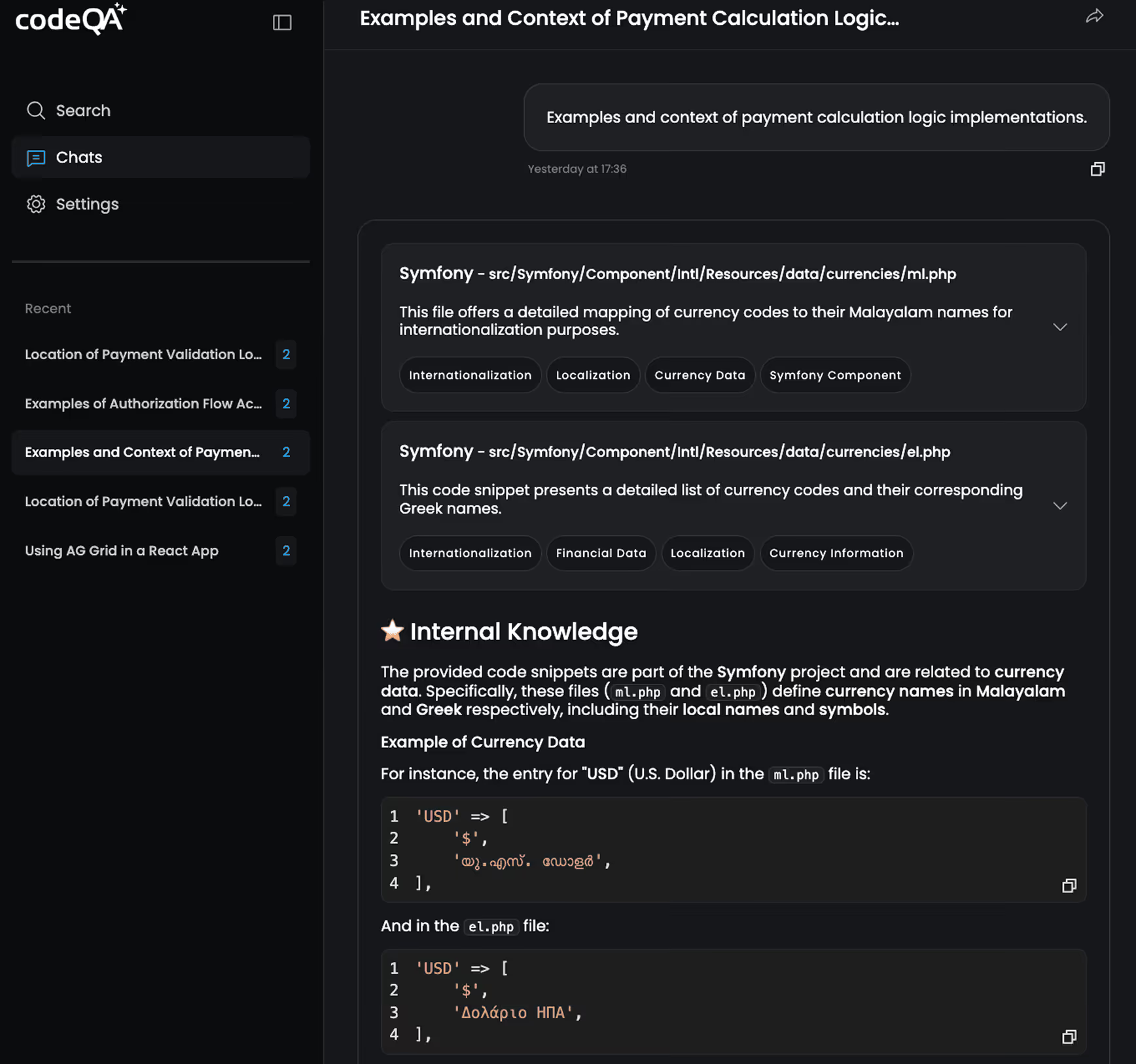
Instead of spending 3 hours reading code to understand “payment logic”, the developer gets a structured answer in few minutes.
The three dimensions of legacy complexity
Legacy Knowledge Iceberg
Most legacy systems appear stable on the surface: documented APIs, known services, visible architecture. But most of the software knowledge is hidden under undocumented decisions, unknown dependencies, and historical trade-offs. This “Legacy Knowledge Iceberg” reveals three core dimensions of complexity: architectural, temporal, and cognitive fragmentation across teams.
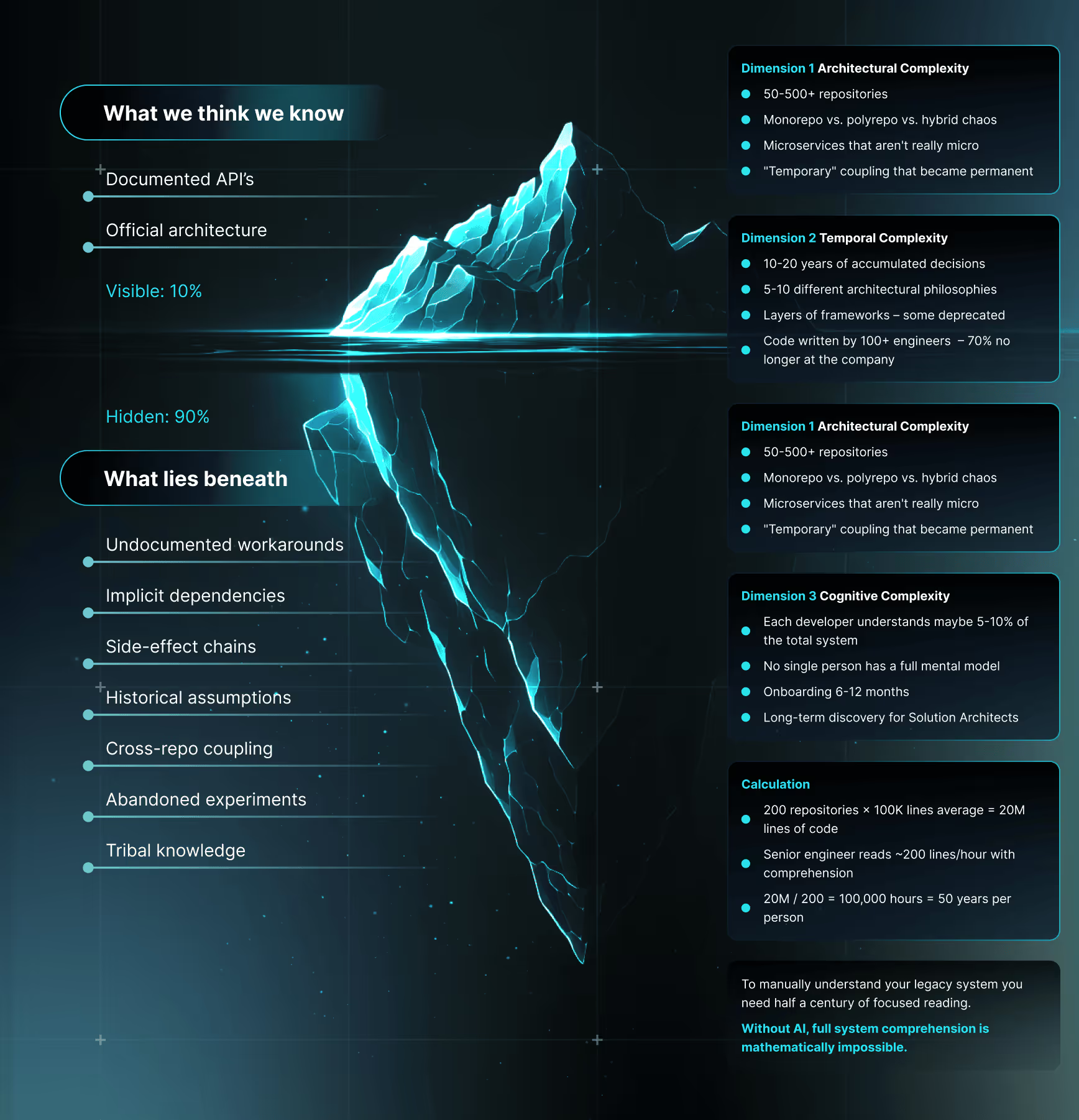
This is where legacy code begins to limit growth.
According to reporting by Developer-Tech on the growing enterprise challenge of legacy systems, organisations increasingly recognise that outdated architectures are not merely operational burdens, they are growth constraints.
In many enterprises, foundational systems were designed for stability, not speed.
Over time, layers of incremental change accumulate: patches, workarounds, duplicated logic and undocumented dependencies.
How knowledge mismanagement is costing your company millions.
Inefficiency directly costs a business an average of 25% of its annual revenue, according to Bloomfire’s Value of Enterprise Intelligence 2025 report. For a Fortune 500 company with $9 billion in revenue, that can translate to $2.4 billion in enterprise value annually, hurting revenue and productivity, stifling innovation, and increasing operating costs.
Use case 2
Bus factor & institutional knowledge risk
Context
12-years code history
Core authorization and billing logic written by 2 senior engineers who left the company
No up-to-date technical documentation
The system runs revenue-critical operations
Challenge
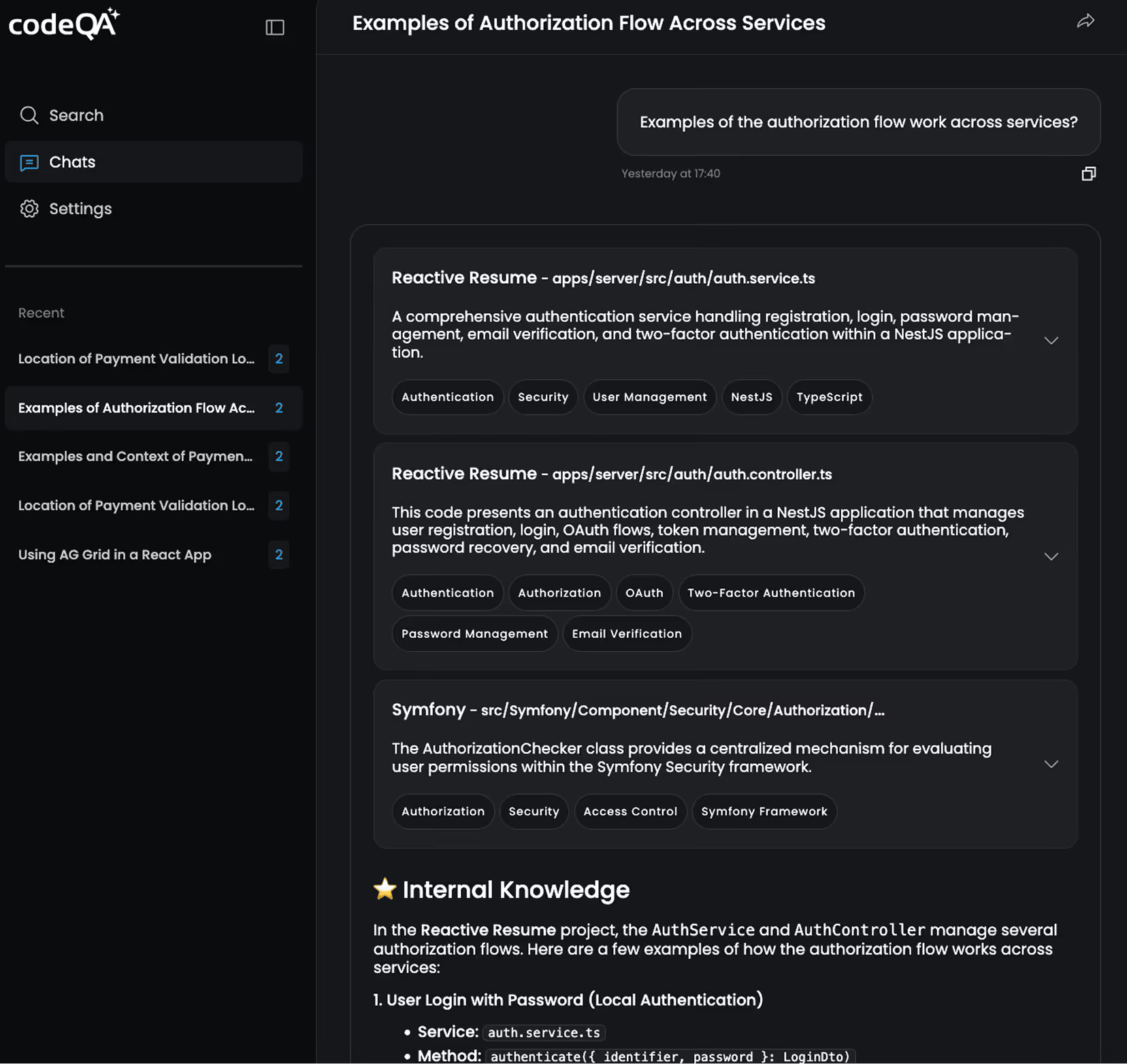
A new Team Lead asks: “Examples of the authorization flow work across services?”
The company needs to:
have proper context how the authorization flow works
understand business decisions from past hidden in code.
Outcome without CodeQA
Manual cross-repository search without updated documentation
With CodeQA
Identifies relevant examples files based on the intelligence from indexed code
Returns references to examples files and relevant to query
Result
Use case 3
Onboarding of new developers
Context
20+ repositories - monolith + microservices + frontend
14-years code history
Each senior developer understands only a fraction of the total system
Multiple architectural eras: struts → spring → partial microservices
Challenge
A newly hired developer joins the payments team.
The developer ask:
"Where is the payment validation logic?"
Outcome without CodeQA
Developer: "Where is the payment validation logic?"
→ Grep search across repos: 847 results
→ Ask in Slack: "Anyone know where payment validation happens?"
→ Wait 4 hours for response
→ Wrong answer (outdated knowledge)
→ 2 days later: finally finds it in /src/payment/validationLogic.java
With CodeQA
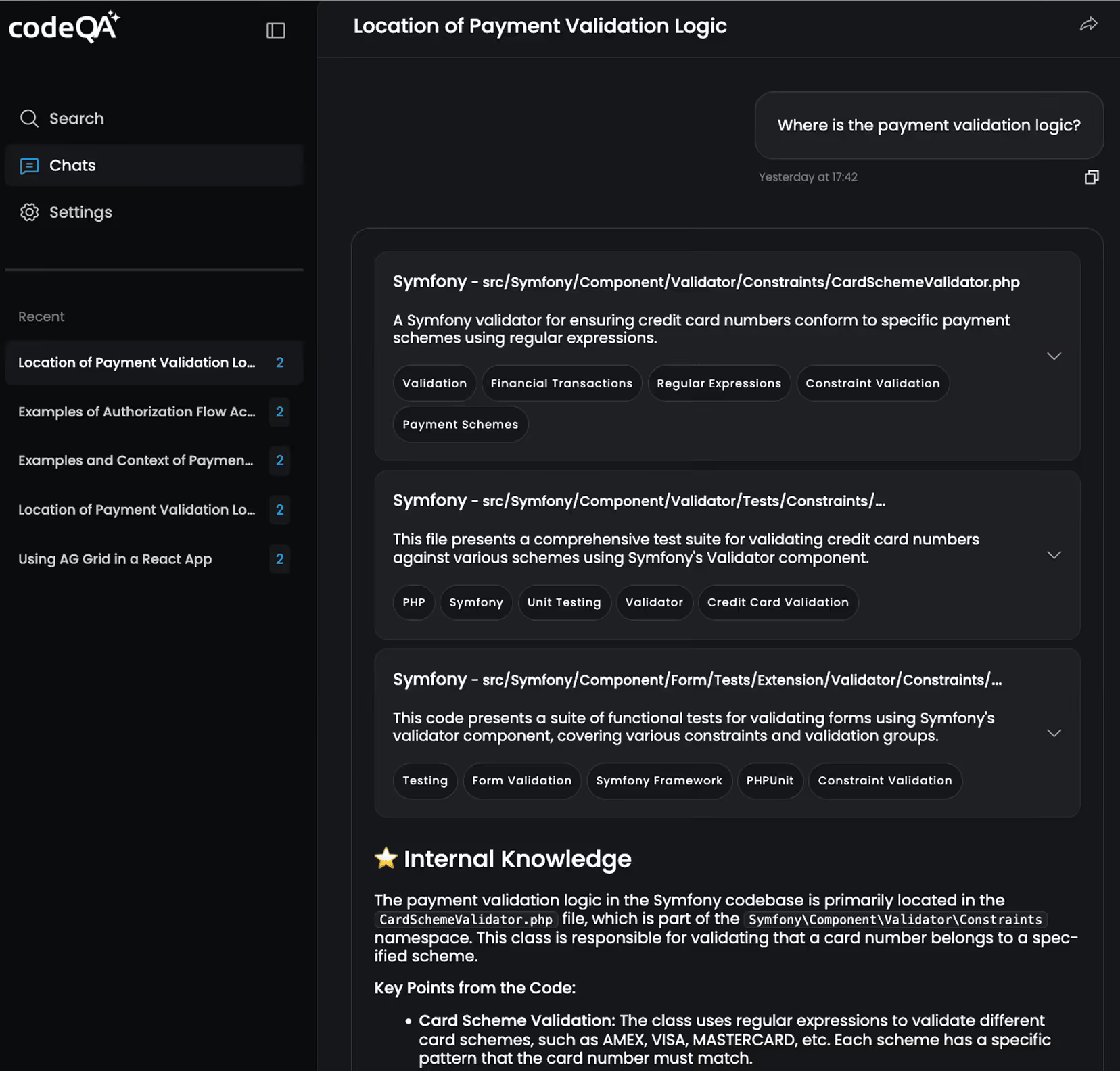
After the question “Where is the payment validation logic?”, CodeQA returns the most relevant files related to payment validation including the main implementation and tests, generates a short summary of the logic and shows a code snippet for a quick verification.
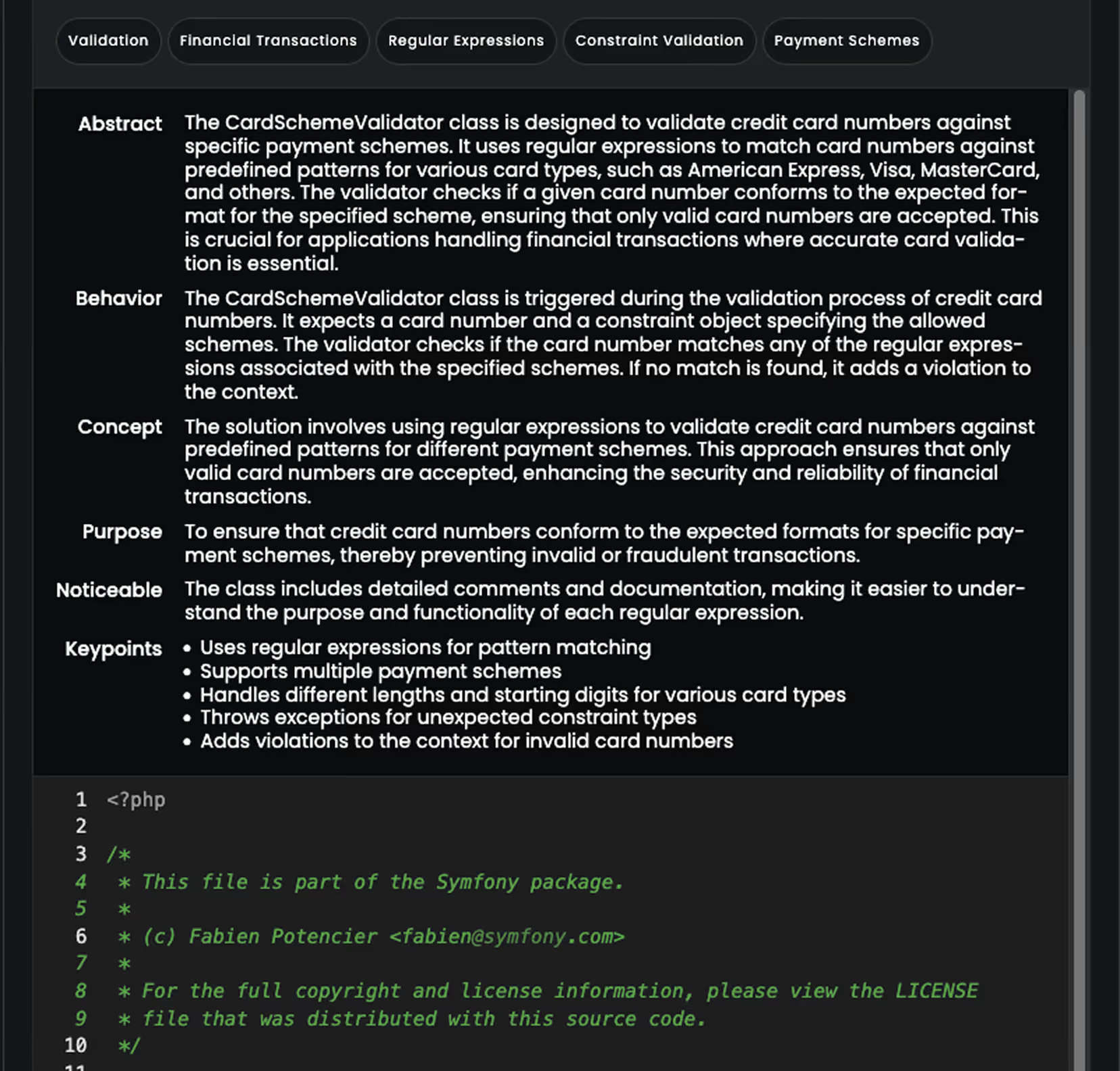
After opening the result CardSchemeValidator.php, CodeQA shows a file summary and the source code, making it easy to verify the answer and review the implementation in full context.
→ Time to answer: 8 seconds
Result: 2 days → 8 seconds = 21,600 x faster
Context is everything
Key takeways for 2026
AI changes this dynamic when it is applied to code understanding, not just code generation.
By indexing multiple repositories and grounding answers in real source files, AI reduces discovery time from hours to minutes. Instead of navigating siloed repositories with limited visibility, teams gain cross-repository intelligence, enabling reuse detection, dependency mapping and safe impact analysis.
Context is everything
The best tools are those that see your entire codebase
Agents are here
Focus on tools that do work, not just those that suggest text
Privacy matters
Choose tools that keep your data safe and local
Review is the new coding
Your primary job is now to inspect and verify
About CodeQA
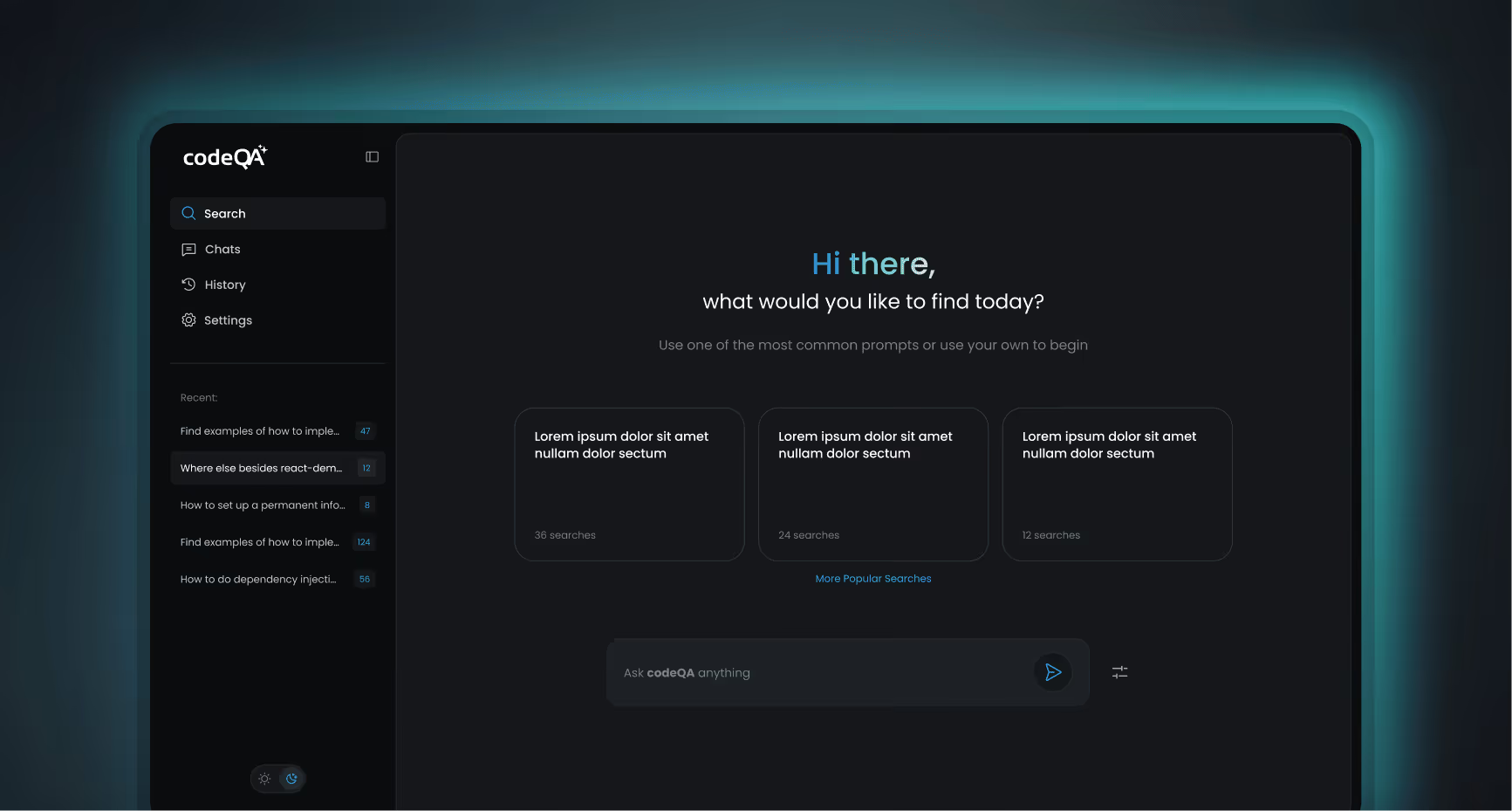
Programming languages
CodeQA supports all programming languages, including legacy languages.
Performance
The number of repositories does not significantly affect performance. Performance is affected by the number of users who query the tool at the same time. We support you to scale your performance level based on the size of your team.
Implementation time
The implementation time depends on the team size and deployment model.
Team's workflow
CodeQA improves code search in a multi-repo environment. In addition, code intelligence integrates with code generators via the MCP server.
Setup of equipment and maintenance
The CodeQA team provides installation instructions and assists with setup, and the customer is responsible for maintenance, unless we have appropriate agreement to handle maintenance as an additional service. You need a cloud environment or an on-premise server for installation.
Permissions to repositories
Administrator specify which repositories a given user should have access to. We configure the tool for any provider. CodeQA will integrate with popular repository services to set up the permissions levels.
Secure & flexible deployment
Choose the setup that fits your compliance and governance needs – cloud, on-premise or hybrid. With support for models from fast and efficient to premium-grade.
Open-source LLMs
CodeQA indexes the specified repositories, auto-documents each file and then uses the indexed knowledge to respond to user prompts using semantic search.
Trial version
Schedule a demo to see CodeQA in action. After the demo, selected partners can test the tool in an open-source repository at no cost for a limited time. Full deployment on your environment requires setup and integration.
Price
Depends on team size and deployment model. Contact us for more details and schedule a DEMO meeting to check CodeQA intellligence.